

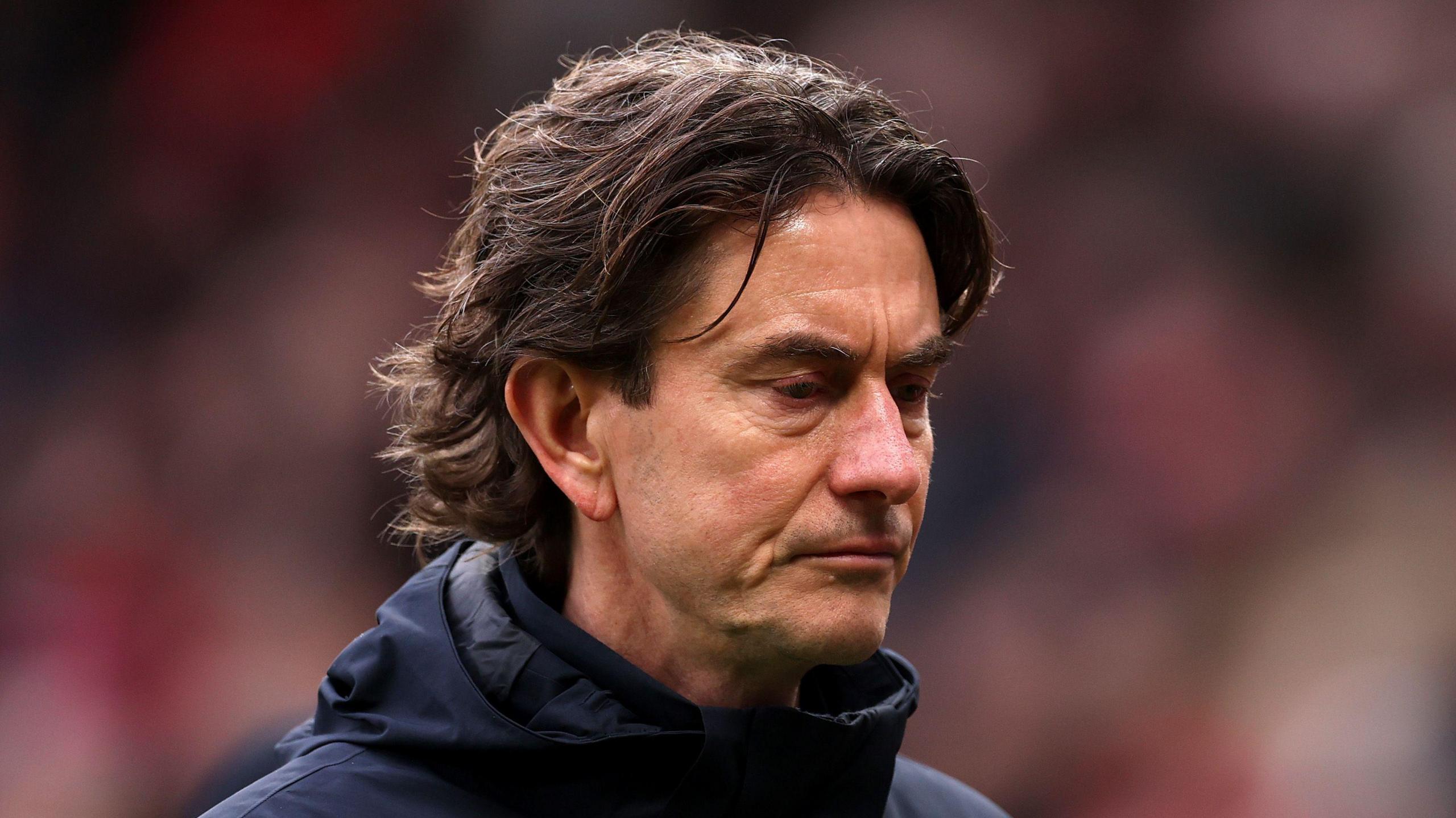
Tottenham Hotspur fans were rocked on February 11, 2026, when the club officially announced the sacking of head coach Thomas Frank — less than eight months after his high-profile appointment. The decision marks yet another dramatic chapter in Spurs’ managerial rollercoaster and leaves supporters asking: What went wrong?
Thomas Frank’s Short and Stormy Tenure
Thomas Frank, who had earned plaudits at Brentford for turning an overachieving team into a respected Premier League outfit, was appointed Tottenham head coach on June 12, 2025.
Expectations were high. Spurs saw in Frank a pragmatic leader who could steady the ship — especially after a turbulent managerial climate and inconsistent performances under his predecessor. But results told a different story.
By February 2026, Tottenham sat 16th in the Premier League, just five points above the relegation zone following a damaging 2–1 home loss to Newcastle United — the final straw that triggered his dismissal.
The Stats That Cost Frank His Job
The numbers behind Frank’s reign make for grim reading:
- Just 13 wins in 38 matches across all competitions.
- A worst-in-club-era Premier League home record since 2008.
- No league wins so far in 2026 — an eight-game winless run.
- A slide towards the relegation zone that alarmed both fans and club leadership.
Despite unexpected success in Europe — qualifying for the Champions League round of 16 — Tottenham’s domestic struggles overshadowed those achievements. The lack of consistency and creativity on the pitch eroded confidence in Frank’s long-term vision.
Financial Fallout: Big Money, Short Patience
Tottenham paid £6.7 million in compensation to Brentford to secure Frank and his coaching team last summer.
Yet less than a year later, the club may now pay millions more in severance fees — a costly gamble that failed to pay off. In a sport where financial efficiency and results go hand-in-hand, this managerial experiment has been expensive in more ways than one.
A Club in Crisis: How Spurs Lost Faith
Spurs’ board — led by chairman Daniel Levy and chief executive Vinai Venkatesham — had initially backed Frank with time and support. But poor league form and growing discontent among supporters ultimately made change inevitable.
Fans, frustrated by tactical stagnation and a lack of attacking flair, openly called for Frank’s dismissal. That chorus of dissatisfaction grew louder as results slipped, and a toxic atmosphere began to take hold at the Tottenham Hotspur Stadium.
Remembering Ange: The Trophy That Didn’t Save a Manager
This isn’t the first time Spurs have made a controversial managerial decision. Just months earlier, the club sacked Ange Postecoglou — despite leading Spurs to their first major trophy in 17 years, the UEFA Europa League.
Postecoglou’s dismissal highlighted a stark truth about Tottenham’s leadership: league performance often outweighs success in cup competitions. Spurs’ board deemed domestic stability and league position more important — even after historic silverware.
Who’s Next? The Search for Stability
With Frank’s departure, Tottenham are now searching for their next manager — potentially their sixth permanent boss in seven years.
Names already circulating include:
- Roberto De Zerbi, recently available after leaving Marseille.
- Ryan Mason, former Spurs captain and interim coach.
- Mauricio Pochettino, currently managing the U.S. national team but a fan favorite and former Spurs legend.
Off the field, rumour mills are already spinning — but one thing is clear: Spurs need a steady hand if they hope to arrest their slide and restore belief among supporters.
Final Whistle: What This Means for Spurs Fans
Tottenham’s decision to sack Thomas Frank underscores a broader truth about modern football — expectations are relentless, patience is thin, and results matter above all else.
For fans, the heartbreak comes not just from losing another manager but from watching a club with so much potential struggle for identity, consistency, and direction.
Whether this is a turning point — or another chapter in a cycle of instability — only time will tell. But one thing’s certain: Tottenham’s managerial merry-go-round shows no signs of slowing down.