

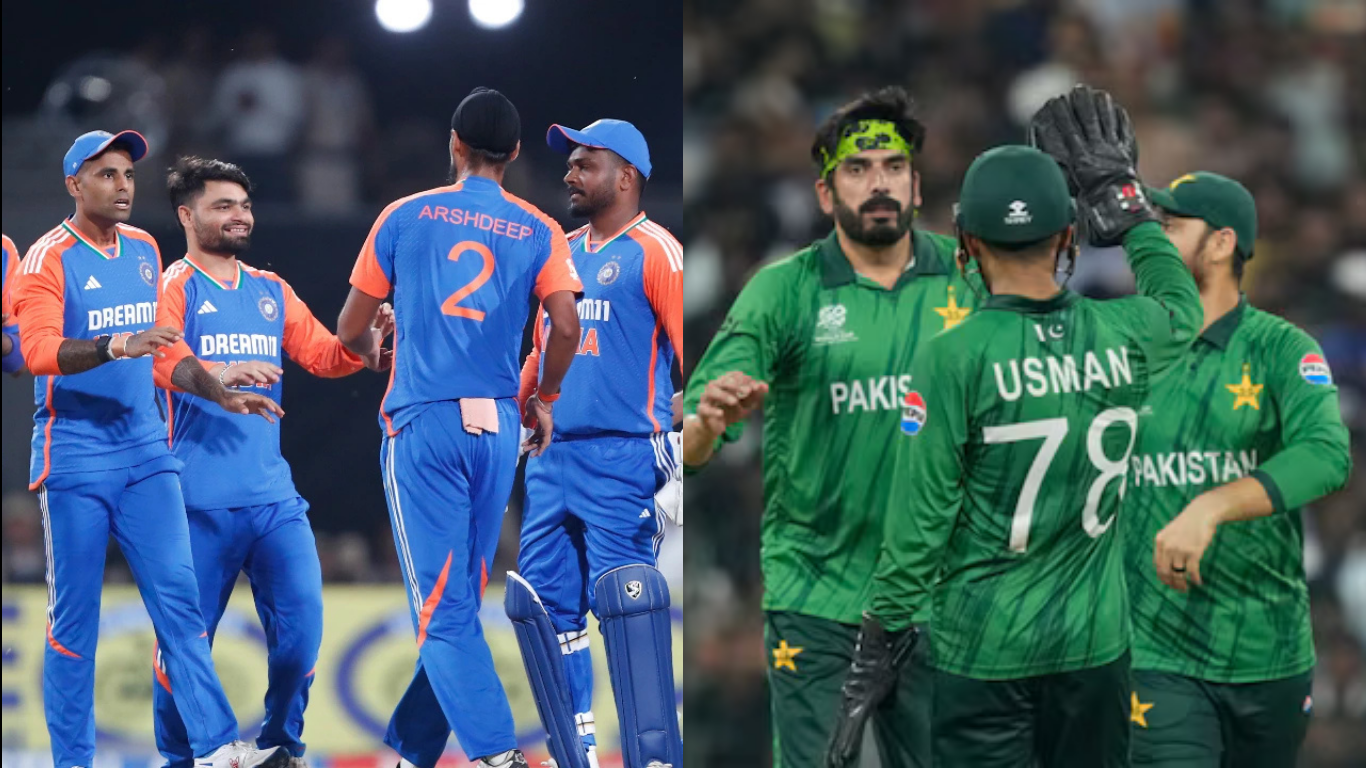
The India–Pakistan cricket rivalry isn’t merely a game. It’s a global phenomenon — political undercurrents, national pride, historic dramas, controversies, controversies, and spectacle all wrapped into one. And the much-anticipated T20 World Cup clash scheduled for 15 February 2026 has become one of the most talked-about sporting events of the year — not just for the cricket on the field, but for the story around it too.
A Rivalry Forged Through History
Cricket between India and Pakistan carries weight unlike almost any other sporting rivalry in the world. Since the two nations first met in 1952, every contest has represented more than bat against ball — it’s been about identity, pride, and geopolitics.
- Head-to-head records heavily favor India in major ICC events, with India winning 15 out of the 16 World Cup matches in all formats against Pakistan.
- In Asia Cup history, India also leads the rivalry, winning 10 of 18 matches compared to Pakistan’s six.
- Their first iconic T20 World Cup meeting in 2007, which ended in a tie, remains one of the most memorable early moments in the tournament’s history.
This history — rich, emotional, and fiercely competitive — fuels expectations every time these two teams prepare to lock horns on the global stage.
Events Leading Up to the 2026 T20 World Cup
The road to the 2026 ICC Men’s T20 World Cup, co-hosted by India and Sri Lanka, has been anything but smooth. Scheduled from early February to March 8, 2026, the tournament promised explosive matchups and high drama.
But the conversation since late January hasn’t just been about run-rates and bowling attacks — it’s been dominated by boycott threats, diplomatic statements, and politics overshadowing sport.
Pakistan Boycott Controversy: The High-Voltage Build-Up
In a stunning development, Pakistan initially announced its intent to boycott the February 15 clash with India. The move didn’t come out of nowhere — it was linked to Pakistan’s solidarity with Bangladesh, which had earlier withdrawn from the tournament citing security concerns about playing in India.
The Pakistan government, with backing from its prime minister, described the decision as principled and fair, stating Pakistan could not take the field against India when a fellow cricketing nation had been effectively pushed out of the World Cup.
This unprecedented move threatened to overshadow the sporting spectacle entirely:
- The International Cricket Council (ICC) warned of legal and financial ramifications, including potential sanctions and revenue penalties.
- Smaller boards and stakeholders expressed worry about losing revenue tied to the biggest financial drawcard of the tournament.
- Fans across the world suddenly faced the very real possibility of no India vs Pakistan match — a global cricketing shock with consequences beyond sport.
For many, the prospect of a boycott was almost unthinkable — yet it happened.
The U-Turn: Drama, Diplomacy, and Return to the Field
After days of negotiations involving the ICC, the Pakistan Cricket Board (PCB), and other cricketing stakeholders — including the Bangladesh Cricket Board — Pakistan reversed their boycott decision and agreed to play the match as originally scheduled in Colombo.
This U-turn was welcomed by fans and broadcasters alike, and even sparked lively online debate, with some dubbing the sequence of events a scripted controversy and others insisting it showed the power of diplomacy and cricketing unity.
Indian players themselves stepped into the conversation: batter Tilak Varma confirmed India’s preparedness and excitement for the high-pressure game once the situation was resolved.
Why India vs Pakistan Is the Biggest Financial Match in Cricket
Beyond emotion, this fixture is cricket’s biggest commercial engine.
Broadcasters rely heavily on India vs Pakistan matches to drive:
- Record-breaking television ratings
- Massive streaming numbers
- Premium advertising slots
- Global sponsorship revenue
It is widely acknowledged within cricket circles that ICC tournaments depend financially on this clash. When the two teams are drawn in the same group, it’s never accidental — it guarantees global attention.
Even neutral fans tune in. Because when these two play, the stakes feel higher.
The Emotional Weight of Past Encounters
To understand the intensity, you must remember moments like:
2007 T20 World Cup Final
The inaugural T20 World Cup final between India and Pakistan was a nerve-shredding classic. Misbah-ul-Haq’s scoop shot into Sreesanth’s hands sealed India’s victory and etched the rivalry into T20 folklore.
2017 Champions Trophy Final
Pakistan stunned India with a dominant performance, winning convincingly and claiming one of their most celebrated victories.
2022 MCG Thriller
Virat Kohli’s six off Haris Rauf under pressure is already part of cricketing mythology.
Each encounter adds layers to the rivalry’s emotional history.
A Historic Moment in a Historic Rivalry
When India and Pakistan take the field on 15 February 2026, it won’t just be a game. It will be a historical statement — a continuation of a narrative that has echoed across decades, carrying with it centuries of shared history, political tensions, and unparalleled sporting passion.
Whether you’re a fan of bowlers or batsmen, geopolitics or pure sport, this clash promises to be remembered as one of the most compelling chapters in cricket’s storied rivalry.
Why This Rivalry Endures
Rivalries fade. Generations change. Teams rebuild.
Yet India vs Pakistan endures.
Because it is rooted in history.
Because it carries emotion.
Because it matters beyond the scoreboard.
On February 15, the tension, the noise, the energy, and the global anticipation will return.
For a few hours, everything else will pause.
And once again, cricket’s greatest rivalry will remind us why sport can be so powerful — dramatic, emotional, divisive, unifying, unforgettable.