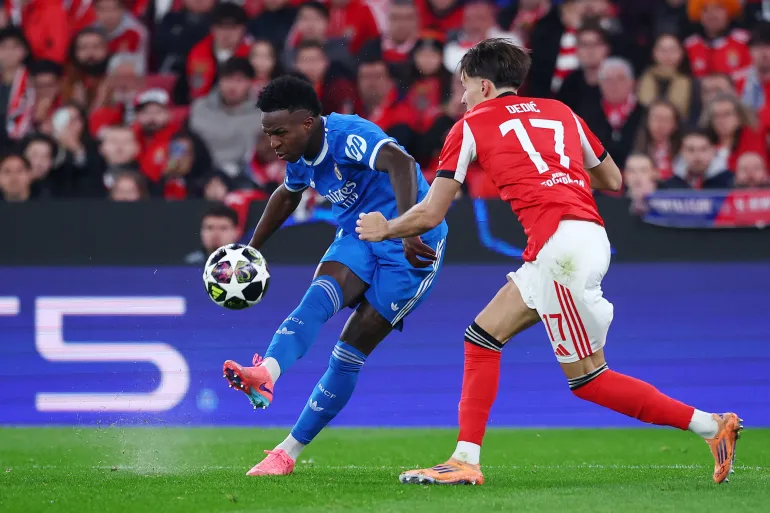

Lisbon — A night that should have been remembered for sheer footballing brilliance instead became a flashpoint in the ongoing fight against racism in sport. On February 17, 2026, Real Madrid edged Benfica 1–0 in the first leg of their UEFA Champions League playoff tie at the Estádio da Luz, courtesy of a sensational curling strike from Vinícius Júnior early in the second half.
But the real story of the night was not just the scoreline — it was an incident that has reignited global debate about racism in football.
The Moment That Stopped the Match
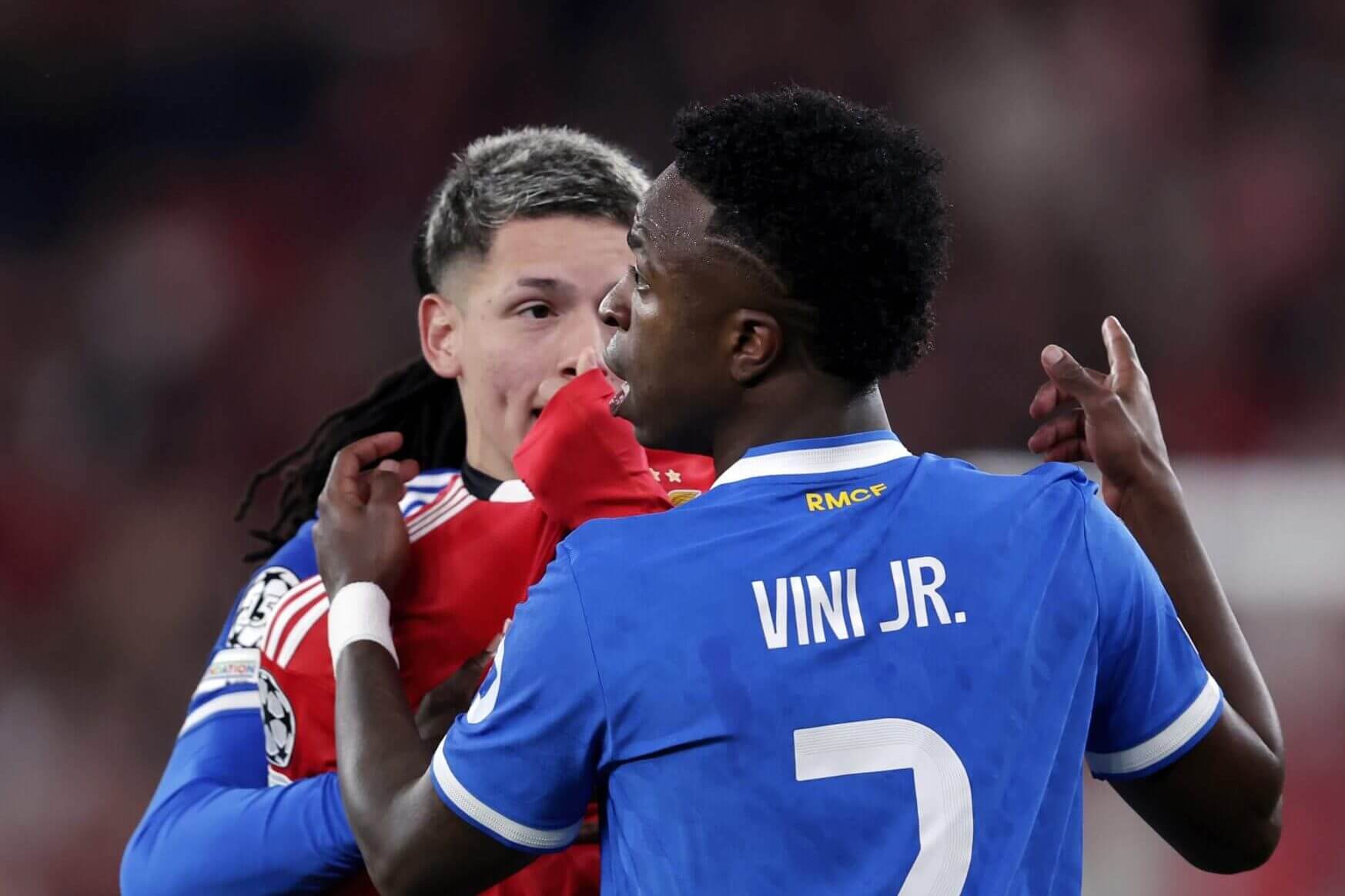
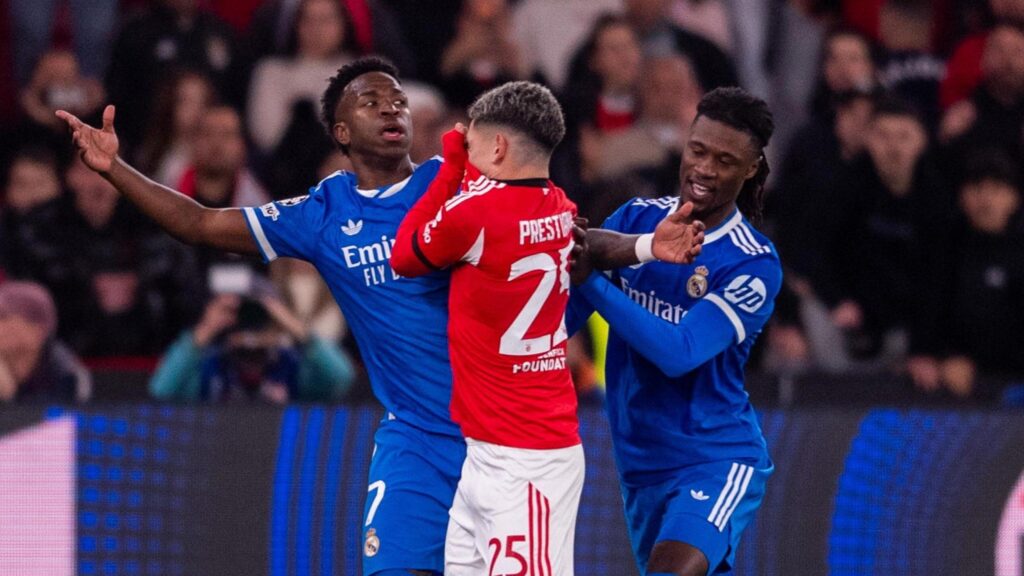
Just minutes after scoring, Vinícius Jr was involved in an on-pitch confrontation with Benfica winger Gianluca Prestianni. Cameras showed Prestianni covering his mouth with his shirt while speaking to Vinícius — a gesture that Vinícius and his Real Madrid teammates interpreted as a racial slur, specifically the word “mono” (Spanish/Portuguese for “monkey”).
Vinícius reacted immediately, running to French referee François Letexier and reporting the alleged abuse. Letexier stopped the game and activated the UEFA anti-racism protocol, which requires play to be paused when such complaints are made. The match was halted for around 10–11 minutes as officials and players discussed the incident.
Chaos, Protest, and an Emotional Response
During the delay, Vinícius Jr sat on the bench visibly distressed, while Real Madrid teammates debated walking off in protest. Forward Kylian Mbappé was among those expressing strong support, publicly backing Vinícius and condemning racism. Teams ultimately stayed on the pitch and the match resumed, but the tension lingered.
After the game, Vinícius posted on social media:
“Racists are, above all, cowards. They need to put their shirts over their mouths to show how weak they are…” — a statement that underscored both his hurt and his resilience.
Prestianni’s Denial and the Fallout
Prestianni denied ever using racist language and claimed that his words were misinterpreted. Benfica, too, stood by their player, suggesting the exchange was competitive banter — not racial abuse. Meanwhile, club legend and then-Benfica manager José Mourinho defended his side, pointing to Benfica’s history and heritage, including icons like Eusébio — one of the club’s most celebrated Black players — as evidence the club itself was not racist.
This denial has not quelled criticism. Many players — including Real Madrid captain Trent Alexander-Arnold — called the incident “a disgrace to football”, while other voices pointed to Vinícius Jr’s well-documented history of being targeted with racist abuse in previous matches across Europe.
A Broader Battle Against Racism in Football
Vinícius Jr’s claim comes against a troubling backdrop: he has faced racist taunts multiple times in his career, including incidents in Spain where fans were sanctioned or prosecuted for racist behavior. Earlier rulings in Spanish football even included criminal consequences for racially abusing him.
UEFA’s anti-racism protocols, introduced in 2024, were designed to give players and teams a framework to report and respond to such abuse. But critics argue that night’s handling showed the system is still imperfect — with no immediate action taken against Prestianni and no clear outcomes announced yet.
Football’s Responsibility and the Message Forward
This incident didn’t just affect one match — it sparked a wider conversation about how football addresses racism at every level. There are calls from players, pundits, and supporters for stronger enforcement, harsher punishments, and a united stand against abuse.
Whether UEFA will take disciplinary action against individuals or clubs remains to be seen, but the broader message is clear: racism has no place on the pitch or in the stands — and incidents like this reignite global scrutiny on how the sport truly lives up to that ideal.
Conclusion — A Win Overshadowed, A Movement Amplified
Real Madrid’s 1–0 win over Benfica may have given them a slim advantage going into the return leg, but it is the off-pitch controversy that will echo far longer. The night reminded the football world that brilliance and beauty in the game can still be tarnished by deep-rooted social issues — and that those who suffer must be heard, supported, and protected.
As supporters, players, and governing bodies reflect on what unfolded, the hope remains that future European nights are defined by goals, skill, and unity — not abuse and division.